Call for Content

Take the opportunity to shape the 2027 conference programme

We are inviting practical, evidence-led submissions from across the critical communications ecosystem. The programme will be shaped around four connected programme areas, with proposals submitted against the Call for Papers category that best matches their main focus.

CALL FOR CONTENT CLOSES ON 9TH NOVEMBER 2026
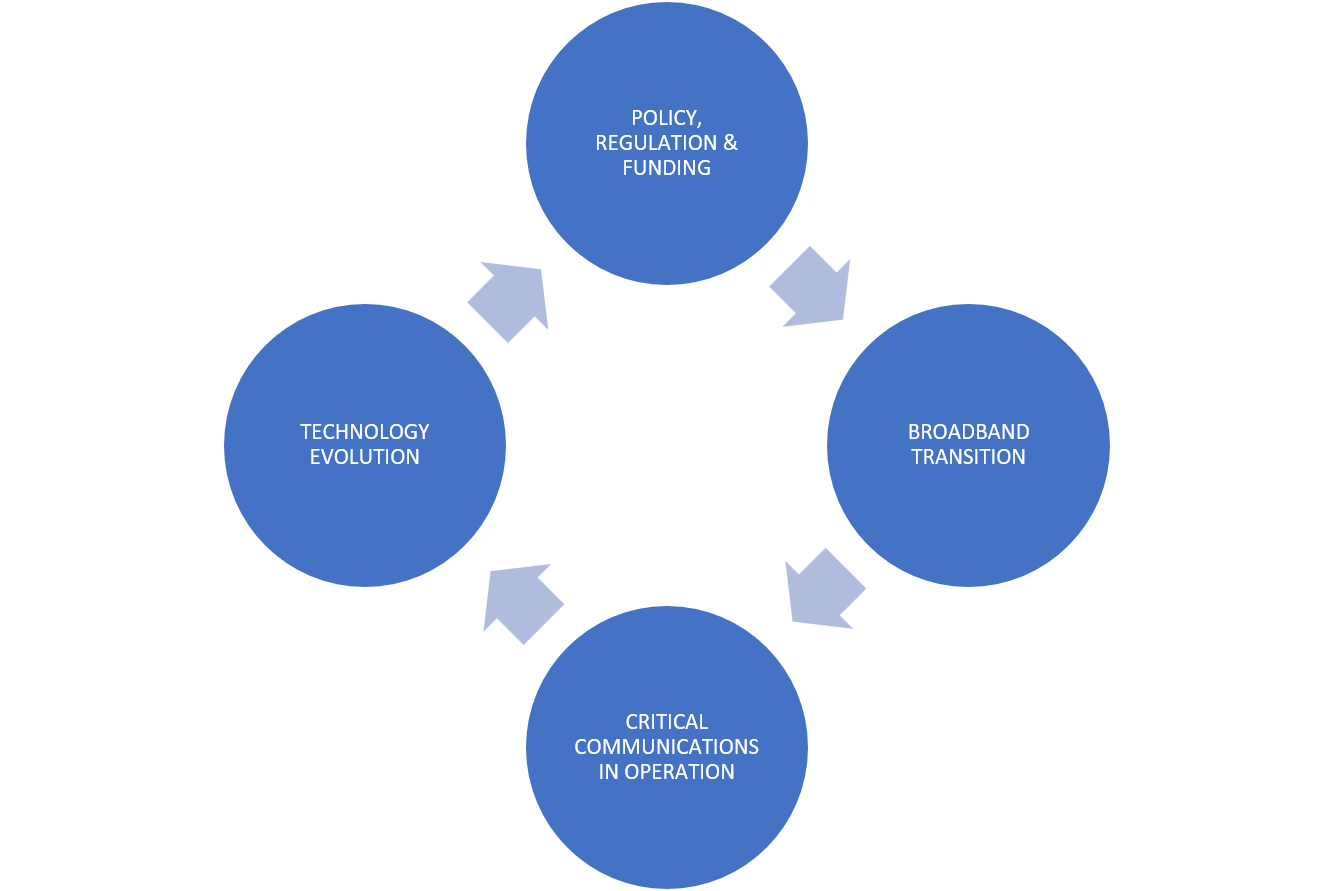
 

THE FOUR KEY PROGRAMME AREAS

POLICY, REGULATION & FUNDING
Strategy, spectrum, governance, procurement, economics and the frameworks that shape critical communications.    

BROADBAND TRANSITION
Deployment, migration, coexistence, assurance, interoperability, training and organisational change.

CRITICAL COMMUNICATIONS IN OPERATION
Real-world use, operational outcomes, resilience, user experience, applications and coordinated response.   

TECHNOLOGY EVOLUTION
AI, data, space and NTN, future networks, R&D, platforms and emerging technologies.


Call for content

WHAT WE'RE LOOKING FOR

We are looking for submissions that bring practical experience, operational insight, original research or informed thought leadership to the CCW 2027 programme.

  • A clear operational, strategic or technical challenge, problem or opportunity.
  • Real-world implementation, testing, deployment or research, with evidence of what happened in practice.
  • Results, outcomes, lessons learned, limitations and measurable impact where available.
  • Clear learning takeaways that others in the critical communications community can apply.
  • For future and emerging technologies, credible research, trials, evidence or analysis linked to a defined operational need or potential impact.

WHO WE WANT TO HEAR FROM

We welcome perspectives from across the critical communications ecosystem, including:

  • End-user organisations, operational practitioners and project or programme leads directly involved in bringing services into use.
  • Government departments, public authorities and organisations responsible for national or regional programmes.
  • Network operators and service operators.
  • Standards bodies and industry associations.
  • Academia, research organisations and collaborative R&D programmes.
  • Industry and technology experts bringing evidence-led, non-commercial thought leadership.

INDUSTRY & VENDOR SUBMISSIONS

Industry expertise is welcome across the Call for Papers, but the main conference programme is not a product showcase.

  • Category 2 is for exhibitor-led operational case studies presented jointly with an end-user customer.
  • For Categories 3-10, industry or vendor submissions must be thought-leadership-led, evidence-based and non-commercial, offering original insight, research, analysis or transferable learning beyond a specific product, service or company.
  • Sales pitches, product demonstrations and company overviews may be considered for a separate technology showcase session where appropriate, but not for the main conference programme.

SUBMISSION INFORMATION

  • Organisations may submit a maximum of two proposals across the Call for Papers.
  • Applicants should select the Call for Papers category that best matches the main focus of the proposal.
  • Applicants should also identify which of the four key programme areas the proposal most closely supports.
  • Full submission requirements, assessment criteria and detailed guidance can be downloaded below

CALL FOR PAPERS CATEGORIES

The categories below define the areas against which proposals will be submitted and reviewed. They sit within the wider four-area programme framework.

A dedicated category for end-user organisations to share practical experience of critical communications in operation.

Submissions should focus on a genuine operational requirement or challenge, how technology or communications capabilities are being used to address it, and the impact on day-to-day operations, safety, response or service delivery. We welcome current projects, completed deployments, lessons learned and insight into how operational roles and requirements are evolving as technology changes.

This category is solely for submissions led by end-user organisations. Confidentiality can be maintained until the event where required.

For this category, an end-user organisation is one responsible for implementing or using critical communications in operational service, rather than primarily providing the technology or service. This may include operational users and project or programme leads directly involved in bringing a service into use.

Practical case studies presented jointly by an exhibitor and end-user customer, demonstrating how technology has been implemented to address a genuine operational challenge.

Submissions should explain the requirement, implementation approach, end-user needs, outcomes and lessons learned. The end-user customer must actively participate in the session.

Submissions focused primarily on promoting a product or service will not be considered for the main conference programme.

Practical experience of deploying new communications capabilities, migrating from legacy systems and preparing organisations and users for new ways of working.

Submissions may explore planning and implementation, user trials, onboarding, operational and technical training, workforce readiness, joint exercises, cultural change, user trust, device adoption, procurement and lessons from deployment or migration programmes.

We particularly welcome insight into what organisations would do differently and what others can learn from the process.

How organisations maintain secure, resilient and dependable critical communications during routine operations, disruption and major incidents.

Submissions may address operational continuity, network and service resilience, backup and deployable capabilities, cybersecurity, secure cloud and edge environments, data sovereignty, supply-chain resilience, energy resilience and approaches to maintaining communications when primary systems are unavailable.

Case studies demonstrating how resilience has been tested in real-world conditions or exercises are particularly encouraged.

How critical communications enable coordination between different organisations, systems and networks during routine operations and emergencies.

Submissions may address interoperability, interconnection, roaming, standards implementation, certification, spectrum coordination, multi-vendor environments, end-to-end testing, performance validation and assurance.

We are particularly interested in practical experience showing what is required to achieve interoperability in reality - not simply what is technically possible.

How AI, automation, data and digital applications are being used to improve operational decision-making, situational awareness and service delivery.

Submissions should identify the problem being addressed, how the technology or application has been implemented, and the value it provides. Topics may include automation, analytics, location and situational intelligence, operational applications, software platforms, data management and integration.

Where AI is involved, submissions should also address governance, human oversight, limitations and risk alongside measurable operational value.

How emerging and evolving communications technologies can extend connectivity, capability and resilience for critical operations.

Submissions may explore non-terrestrial networks, satellite connectivity, future mobile networks, direct-to-device capabilities, connected devices, sensors, robotics and other technologies supporting communications and operations in the field.

We also welcome forward-looking research, trials and emerging concepts that demonstrate how future technologies could address real operational requirements.

How devices, interfaces and human factors affect the way critical communications technologies perform in real operational environments.

Submissions may examine device design and adoption, usability, accessibility, inclusive design, wearables, operating-system considerations, lifecycle management and how users interact with technology under operational pressure.

The emphasis should be on the relationship between the technology and the person using it, including evidence from user trials, research or operational deployment.

How policy, spectrum, governance, procurement and funding decisions shape the development and delivery of critical communications.

Submissions may address spectrum strategy and allocation, regulatory frameworks, governance models, procurement approaches, funding and investment, public-private collaboration, national programmes and the economic considerations behind major communications projects.

We welcome practical lessons from organisations developing, procuring or governing critical communications capabilities at local, regional or national level.

How critical communications support civil protection, national resilience and cooperation between civil and military organisations.

Submissions may explore civil-military cooperation, technologies and capabilities transitioning from defence into civil protection, communications across critical infrastructure, and lessons from real incidents, exercises or major resilience programmes.

The focus should be on practical experience, transferable learning and how communications capabilities can strengthen coordination and preparedness across organisational boundaries.

Forward-looking research, horizon scanning and emerging technologies that are not yet commercially released or fully deployed but could shape the future of critical communications.

Submissions may explore early-stage research, prototypes, trials, standards activity, R&D programmes, future network capabilities, new operating concepts, emerging risks or technologies still in development.

The focus should be on credible evidence, analysis and operational relevance. Submissions should explain the problem or opportunity being explored, the maturity of the work, potential impact, limitations and what the critical communications community can learn at this stage.

Call for Content Submission Form

Please complete the form below to submit your proposal, choosing only one topic category. Please add background on what this proposal attempts to solve, what are the results, what will the audience learn, and what are the implications for the critical communications industry. All fields must be fully completed, incomplete forms and sales pitches will not be considered.  
Submission deadline: 9 November.